


Understanding the 2026 Tax Reference Guide: What You Need to Know
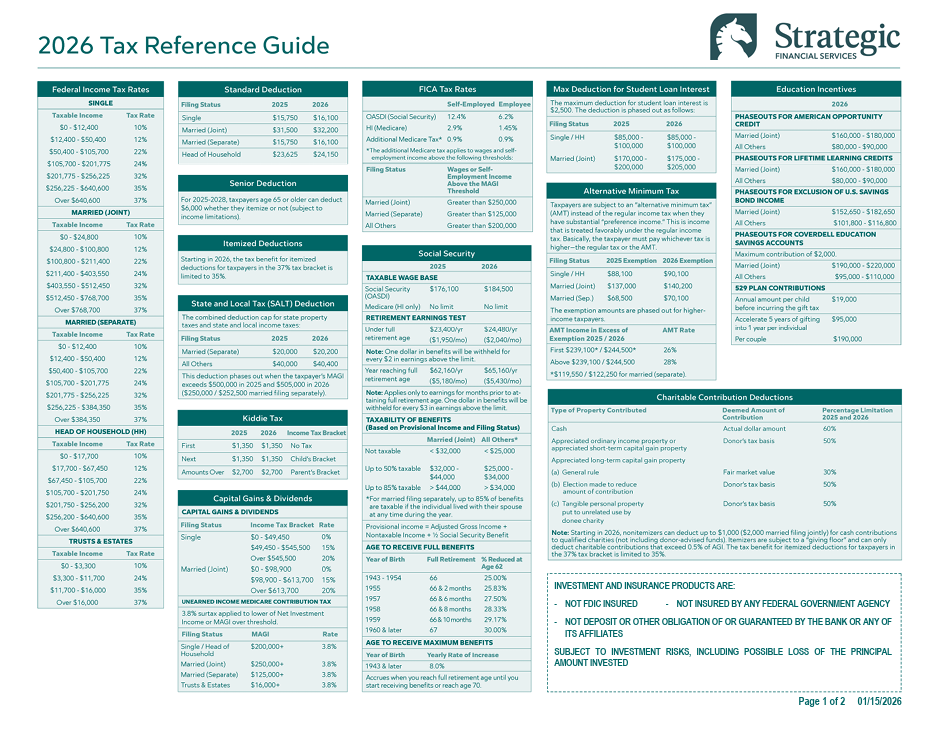
It's the 2026 tax season, staying informed about changing regulations, rates, and deductions is more important than ever. The new 2026 Tax Reference Guide provides valuable insights for individuals and businesses preparing for the upcoming filing period.
Key Updates for 2026
The latest guide includes several updates designed to reflect inflation adjustments, policy changes, and evolving tax priorities. Among the most notable changes are:
- Standard Deduction Adjustments: The IRS has increased the standard deduction to align with inflation, offering a modest benefit for most taxpayers.
- Updated Tax Brackets: Tax rates remain largely stable, but income thresholds have shifted upward, reducing potential bracket creep for many individuals.
- Business Deductions and Credits: Small business owners should take note of revised limits for Section 179 deductions and expanded clean energy incentives introduced in 2026.
- Retirement Contribution Changes: Limits for 401(k), IRA, and other retirement accounts have increased, providing more opportunities for tax-advantaged saving.
Why It Matters
Understanding these shifts can make a significant difference when planning ahead. The 2026 reference guide helps taxpayers:
- Maximize deductions and credits.
- Ensure accurate filing and compliance.
- Strategically plan investments, retirement savings, and charitable contributions.
Final Thoughts
Proactive tax planning is key to minimizing stress when filing season arrives. Review the 2026 Tax Reference Guide early and consult with a qualified tax professional to make the most of the coming year’s opportunities.
Click HEREto view the reference guide.
Disclosure: This is for informational purposes only and should not be considered tax advice. Everyone’s situation is different, so you should consult a qualified tax professional for guidance tailored to your circumstances.